

MobileTrader
MobileTrader: platform dagangan di hujung jari!
Muat turun dan mulakan sekarang!


 30.09.2026 01:38 PM
In this briefing, we examine four key developments shaping the current market backdrop and challenging conventional wisdom. We explain why the Bank of Japan's historic rate hikes proved powerless to stop the yen from weakening amid synchronized Fed tightening in the US.
We analyze the Bitcoin phenomenon, which, despite sky-high Treasury yields and rising energy prices, has posted a rare September surge.
We also highlight the "great exodus" of crypto whales withdrawing tens of millions from exchanges ahead of a potential market rally, and assess the fallout from Meta's aggressive push into enterprise software, which has already hit rival stocks and set off an unprecedented war for tech talent.
Taken together, these events sketch a clear picture of a global reallocation of opportunities where success depends on reading new macro trends and acting ahead of the crowd.

On Tuesday, the Japanese yen traded stubbornly near 157 per dollar, shrugging off Tokyo's efforts to regain control. On paper, the authorities held all the cards: rate increases to 31-year highs and stern warnings about currency weakness.
Yet the yen keeps weakening. This paradox illustrates a hard rule of global finance: local monetary tightening is ineffective when policymakers at the other end of the world are playing by different rules.
A brief timeline: on September 18, the Bank of Japan took a long-awaited step, raising its policy rate by 25 basis points to 1.25%. The vote was 7–2 and pushed borrowing costs to levels not seen since 1995.
Instead of stabilizing the yen, markets sold it. By September 24, USD/JPY surged to 159.03, and only emergency verbal interventions from Japanese officials managed to temper speculators and cool the move slightly.
What's the root cause? The answer is plain math and the actions of the BoJ's main competitor — the US Fed. Two days before Tokyo's historic step, on September 16, the Federal Reserve also raised interest rates by 25 basis points to a 3.75–4.00% range. Since both central banks added 25 bps, the spread between them did not narrow — it stayed roughly near 275 bps.
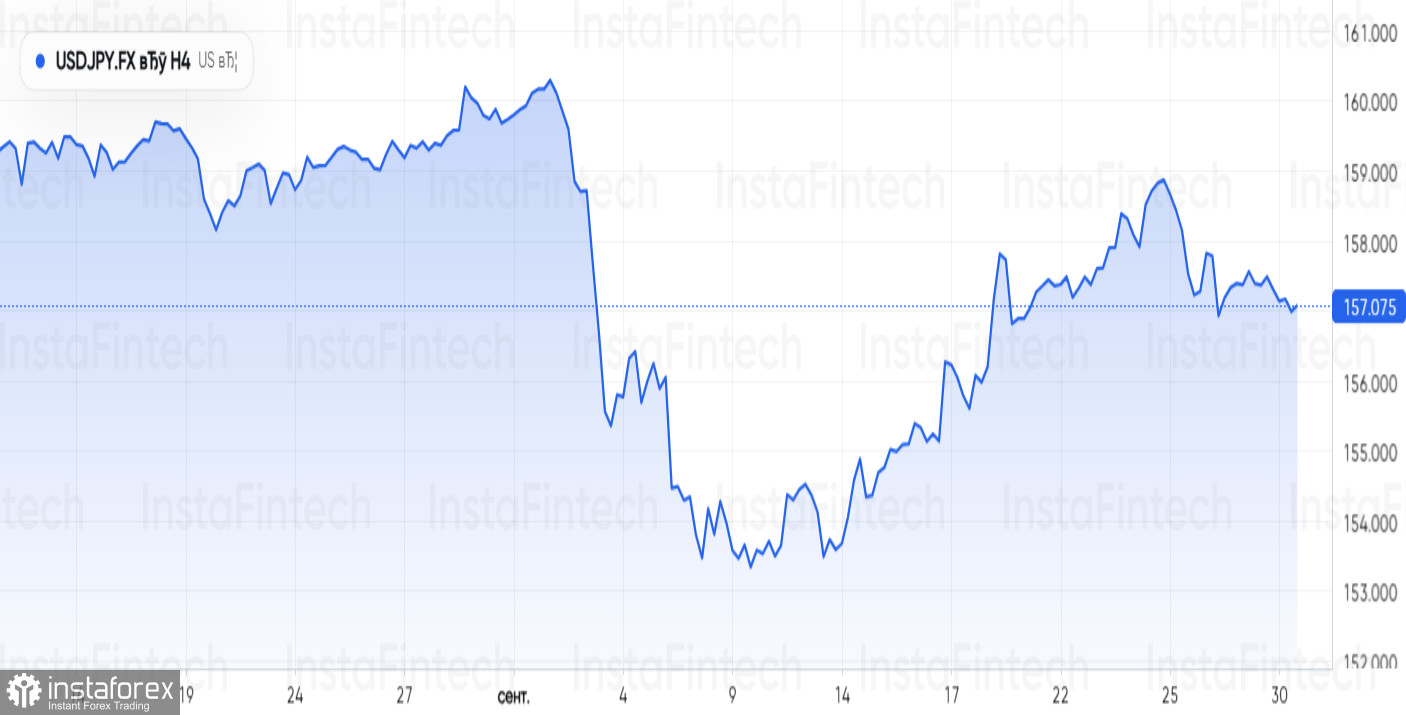
That huge yield gap continues to fuel carry trades that systematically pressure the yen throughout 2026. Why hold a weakening yen when 10-year US Treasury yields have pierced the psychologically important 5% level, the highest since 2007? Dollar assets shout their yields, and capital flows where returns are higher.
Do market participants get it? Absolutely. A Reuters poll conducted in early September shows that economists have materially revised their views. In July, only 23% expected the BoJ's rate to reach 2% or higher; by autumn, that share rose to 40%. About 62% now expect the Japanese rate to land near 1.75% by mid-2027.
Even this accelerated rate cycle may end up feeling like running on a treadmill. If the Fed continues tightening in parallel, Tokyo's efforts will be overwhelmed by rising US yields.
High volatility in FX pairs — especially USD/JPY — creates trading opportunities for participants who can read macro trends and exploit central-bank currency wars.
All instruments referenced in this report, including major FX pairs, are available on the InstaForex platform. To seize opportunities amid today's market storms, open a trading account at InstaForex and download the mobile app. Trade quickly, efficiently, and from anywhere.

On Friday, September 29, Bitcoin extended its impressive march, trading in an active range between $82,500 and $84,500. The world's leading crypto stands on the brink of an historically unusual monthly rally. Through the final trading day of September, the asset is up roughly 7% for the month, building on an astonishing 25% jump in August. The market has not seen a streak of explosive gains like this in more than a decade.
A successful close to September would not only please crypto bulls but also break a grim pattern that has held since 2013: historically, a "green" August was always followed by a "red" September. Moreover, it would give Bitcoin three consecutive months of gains (July–September) and deliver more than 40% total return for Q3 — the first genuinely positive quarter for the digital currency since Q3 2025.
This triumph, however, is occurring against a background of harsh macroeconomic storms. The 10-year US Treasury yield shot to 5.26% on Tuesday, returning to levels last seen in 2002.
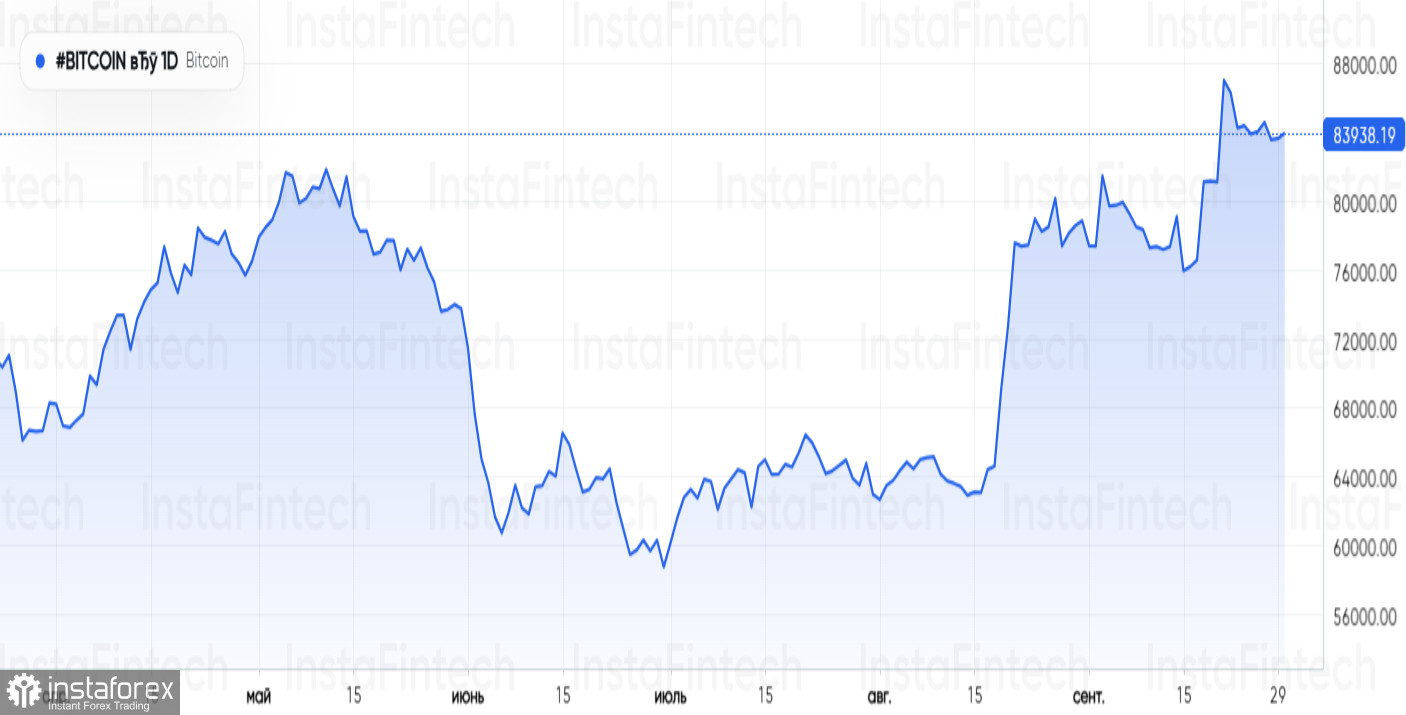
Meanwhile, the 30-year yield hit a 24-year high above 5.60%. Traditional markets are jittery as well: oil is stubbornly holding above $90/bbl, and gold plunged roughly 3.6% on Monday, only partially clawing back losses.
Bitfinex analysts point out that the main restraining factor for BTC this week is rising real yields on low-risk assets rather than a wholesale change in market sentiment. Any further upside will need to be supported by fundamental spot demand.
Kyle Rodda, senior market analyst at Capital.com, expands on that view, flagging the sharp rise in energy prices as a material headwind for non-yielding assets. "As long as that upside risk to energy persists, Bitcoin is likely to struggle to recapture upside momentum," Rodda told Bitcoin.com News. Still, he added a note of optimism, observing that Bitcoin's technicals "remain broadly constructive."

September 29 was a really tense day for crypto exchanges. While retail investors watched charts, large players executed a string of massive withdrawals. In a matter of hours, tens of millions of dollars left exchange hot wallets — and that was only the tip of an iceberg: the global trend of draining exchange reserves markedly accelerated in September.
According to TokenPost, three epic outflows were recorded in a single day. First, a newly created wallet pulled 9,132 ETH (about $24.37m) from Binance over three hours. It was followed by a transfer of 7,500 ETH (roughly $20.5m) from an address tagged qianbaidu.eth in just half an hour. A third whale, also operating from a fresh wallet, moved 14,836 ETH (about $39.7m) from Binance and OKX over a nine-hour window. The day's total: more than 31,000 ETH, roughly $84 million, changed custody.
However, these splashy one-offs are symptoms of a systemic process. Binance, the primary liquidity "donor," is shedding assets rapidly. CryptoQuant analysts warn that the exchange's Bitcoin balances fell about 3.3% last week (down ~23,000 BTC to ~678,000 coins).
Ethereum balances are shrinking too: ether reserves on exchanges dropped roughly 3% (about 110,000 tokens), down to ~3.54 million ETH. Stablecoin holdings, notably Tether, remain sizable — roughly $38.1 billion — but much of that liquidity currently sits on the sidelines.
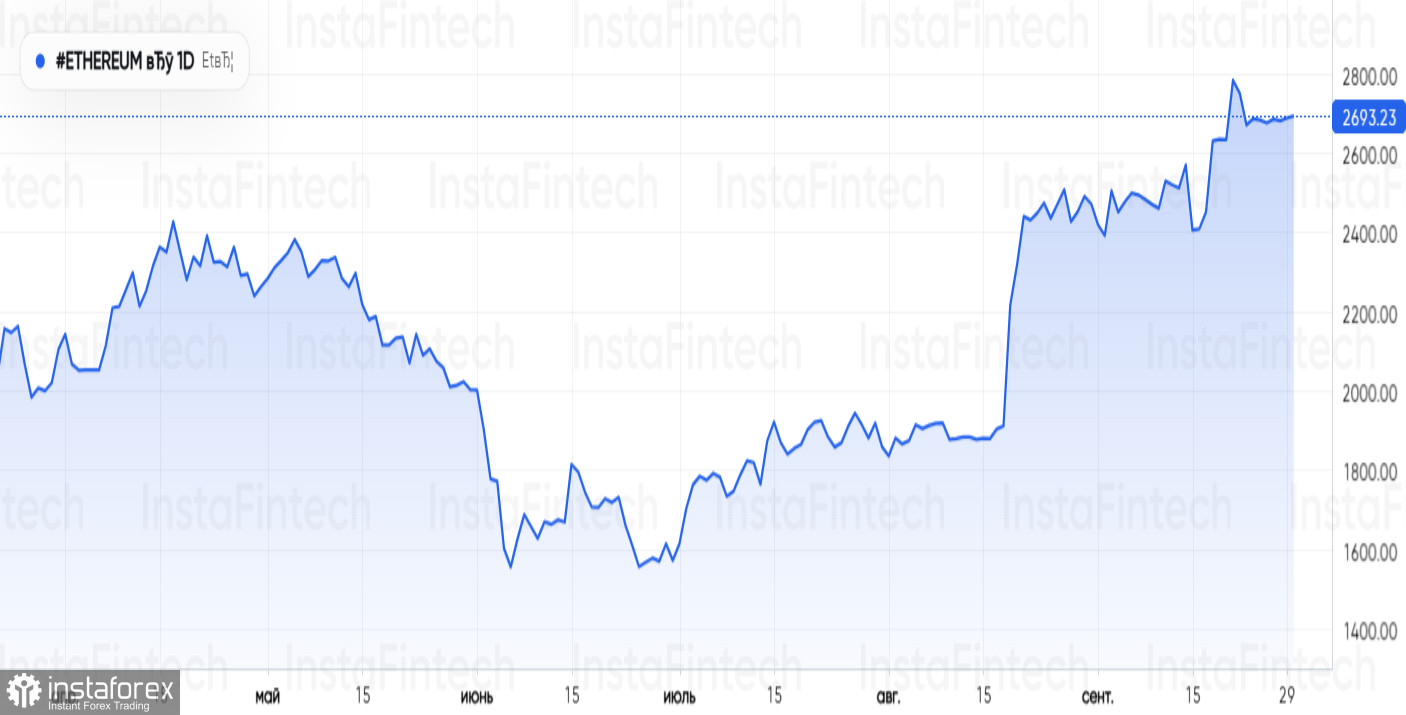
Where is the liquidity headed? CryptoQuant highlights that the market is paused, waiting for a key signal. A large pool of stablecoins is sitting "on the bench." The main question is whether that liquidity will remain dormant or flow back into the spot market and trigger a fresh buying wave.
The trend of hoarding assets in private wallets rather than on exchanges has been building since May. Over 3 million ETH coins have been withdrawn from Binance alone, and total exchange reserves across the network are at historic lows not seen since 2016. That is a clear sign that big players are positioning for long-term appreciation, moving assets off exchanges to reduce exposure to short-term speculative volatility.

Monday proved to be intense for the enterprise-software market as well. As the world absorbed another round of Silicon Valley headlines, Meta Platforms struck fast, unveiling the Meta Enterprise Platform.
The move represents Mark Zuckerberg's most aggressive expansion yet into territory long dominated by traditional IT giants. The market reaction was immediate: shares of leading enterprise-software vendors slid, and investors scrambled to reassess risks posed by a new, massively resourced competitor.
Zuckerberg framed the initiative as "the next big pillar" of Meta's business. In posts on X and in the corporate blog, he laid out the offering: Meta is not just selling software but an AI-driven technology stack for enterprises. The toolkit includes the Muse AI agent, Meta Business Agent, and developer tools such as Muse API and Muse Code designed to integrate neural networks seamlessly into everyday business workflows.
The Meta enterprise platform will leverage strengths few others have: cutting-edge models, leading agents, massive infrastructure, and years of close collaboration with many businesses, Zuckerberg said, signaling that the company intends to compete in B2B seriously and for the long term.
Meta's ambitions go beyond code. The company has launched a full-scale talent offensive that landed a painful blow to MongoDB. Reuters reports Meta has hired Chirantan "CJ" Desai, who served less than a year as MongoDB's president and CEO.
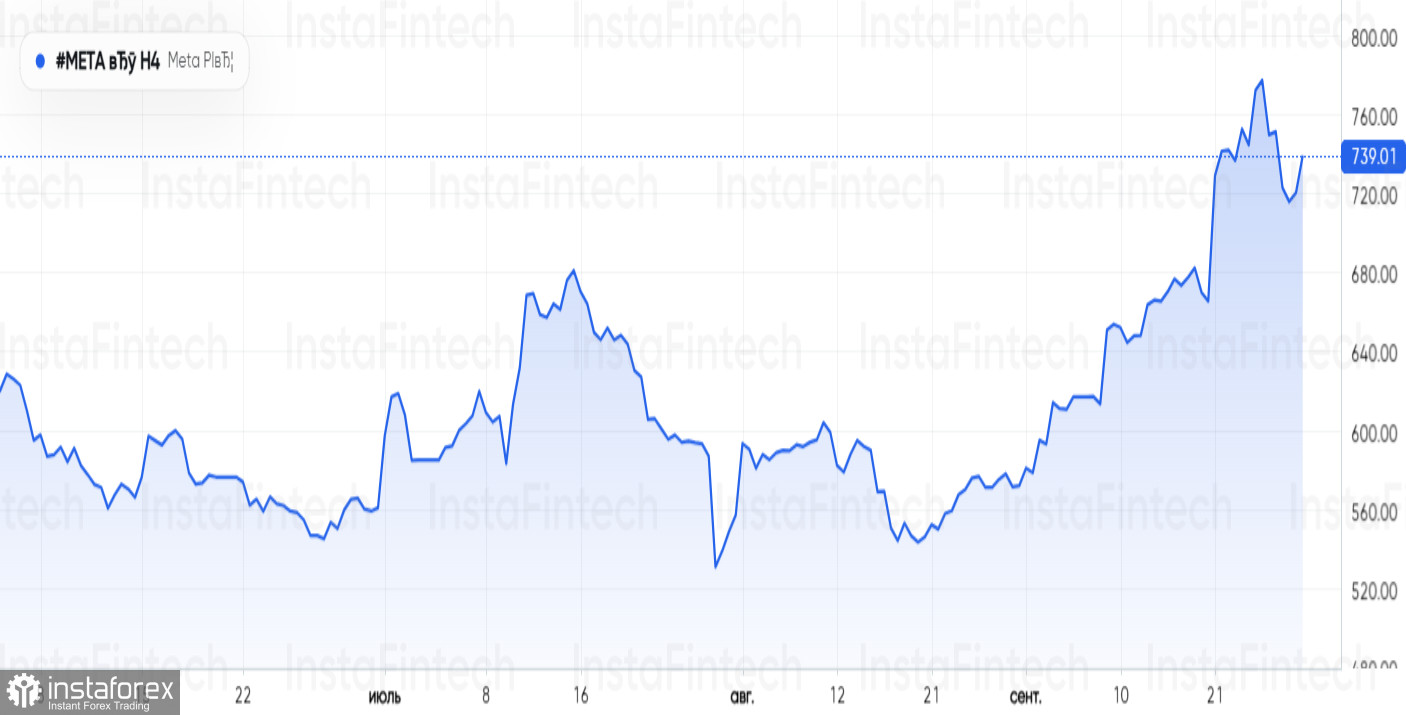
Desai will lead Meta's new corporate platforms effort as head of enterprise platforms, reporting directly to Zuckerberg. For MongoDB, this was a crisis: the company installed former executive Dev Ittycheria as interim CEO and scrambled to engage top recruiting firms to find a permanent replacement. MongoDB shares, already under pressure, plunged at the open — another casualty of the "Meta effect."
Such tectonic shifts in tech create substantial stock market volatility. For investors and traders, that means not only elevated risk but also trading opportunities—in the stocks of giants like Meta and MongoDB as well as their competitors.
All instruments mentioned in this article are available for trading on the InstaForex platform. Open an account today, download the mobile app, and keep your finger on the pulse of global finance and technology trends wherever you are.
MobileTrader: platform dagangan di hujung jari!
Muat turun dan mulakan sekarang!
Anda telah pun menyukai siaran hari ini
* Analisis pasaran yang disiarkan di sini adalah bertujuan untuk meningkatkan kesedaran anda, tetapi tidak untuk memberi arahan untuk membuat perdagangan.
 E-mel untuk penulis kandungan analitik teks dan video: content-authors@instaforex.com


